

For four generations, the Lindley family has diversified their 400-acre farm, embraced regenerative practices and nurtured a future where healthy soil, thriving animals and local milk production go hand in hand
By Alison Grau | Photography by Lindsay Metivier
Neill Lindley learned early on not to put all his eggs in one basket.
His family’s farming roots run deep. A generation of forestry and sawmill work by his great-grandfather and grandfather laid the foundation for Lindale Farms. Neill’s father, Darryle Lindley, launched the Snow Camp farm’s dairy operation in the late 1960s. When Darryle grew tired of milking cows about 20 years later, Neill and his wife, Cori Lindley, stepped in to take the reins.
“Since then, it’s been a wholesome life, a very busy life,” Neill says. “Lot of ups and downs – but mostly ups.”
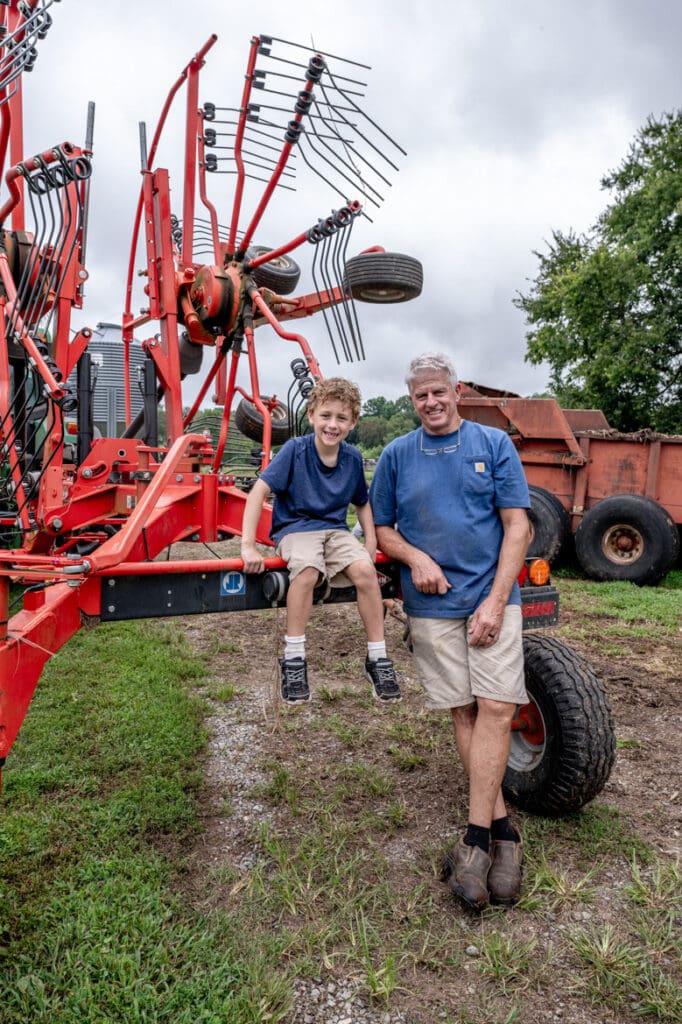
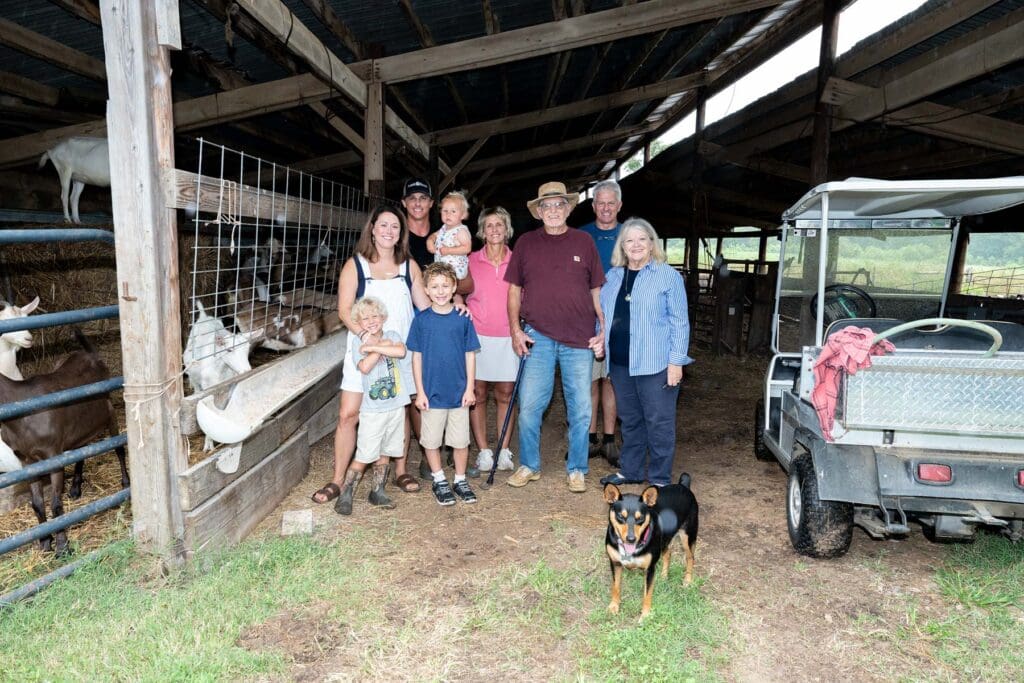
Neill and Cori live in an idyllic white farmhouse just down the road from the brick home where he grew up, and where Darryle still lives, now with grandsons running through the yard and a fridge that’s always stocked with sweet tea.
“I spent most of my time [growing] up here getting in the manure and playing, staying dirty all the time,” Neill says.
Today, Lindale Farms spans 400 acres and supports four farming operations – dairy cows, goats, chickens and crops including hay, silage and grain to feed the animals – all managed by family. You’ll often find the Lindleys’ eldest daughter, Morgan Lindley, hauling hay and grain across the farm; their youngest, Alison Lindley, managing the farm’s website and social media; and their son, Neill Lindley II, oversees the chicken houses, helping diversify the farm and keep the business resilient. If one operation falters, another picks up the slack.
About 25 years ago, the elder Neill reached a breaking point. He’d grown weary of buying more and more weed and pest control agents for the farm because of fluctuating price commodities. It felt impossible to keep up.
“We kind of just dropped back and punted and said, ‘OK, we’re just going to quit with all the salt-based fertilizer, pesticides [and] herbicides, and just go get the whole farm certified organic,’” Neill says. “And so we did.”
That shift required patience. Neill dove into learning about soil biology and how to nurture crops without chemicals (and without weeds taking over) – a practice he says he’s still figuring out to this day. He even began using reverse osmosis water to mix and apply natural minerals like calcium and magnesium to his fields.
“It’s so exciting to me to try to balance nature and see what nature can do, rather than just going out and punching it in the lips, saying, ‘You’re gonna grow this, and you’re gonna do it this way,’” he says.
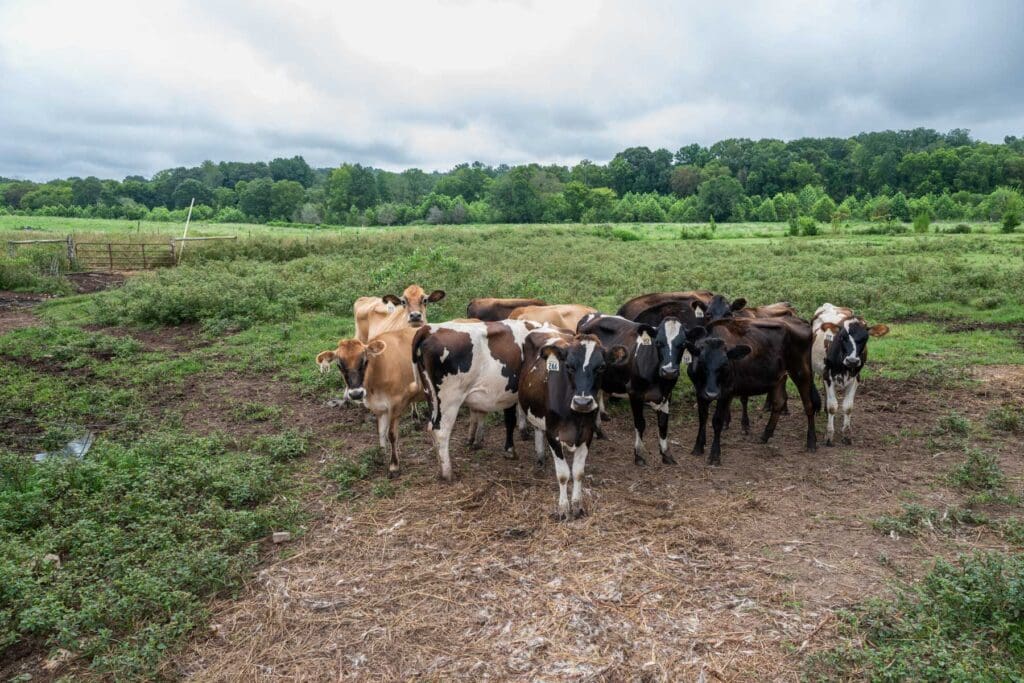
One of the first things he noticed once he made the switch was that, when they successfully rotated cows, the pastures produced better and more productive grass with manure than it had with the use of herbicides and fertilizers.
“The best combination is soil and animals,” Neill says. “Animals are the best fixers, biologically, and in return, you get better milk production.”
The organic certification process itself is straightforward: Three years without synthetics or herbicides, and you’re organic. The real job, Neill says, is keeping all the records, which is why this year, for the first time since their transition to regenerative practices, Lindale Farms won’t renew its certification.
“It came to a point where it was just a label,” Neill says. “When it first started, it was a great thing, because it took all the poisons away. But after a while, people were just producing to get the extra premium for organics, and they’re not looking at nutrient density, protein, the stuff that’s really good for you. We tell people [we’re] ‘going beyond organic,’ and we’re working more on producing healthy food.”
The Lindleys have long been a part of Organic Valley, a national farmer-owned co-op, but are now moving toward selling more of their milk locally.
“That’s a lot more exciting because it stays right here, close,” Neill says. One of their new customers is nearby Ran-Lew Dairy.
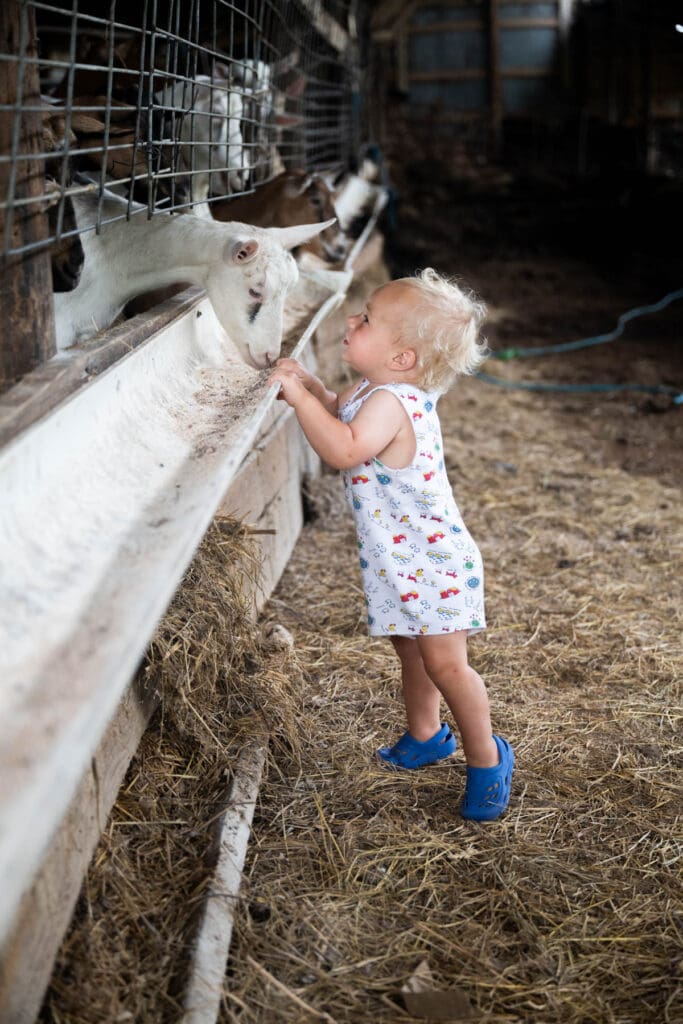
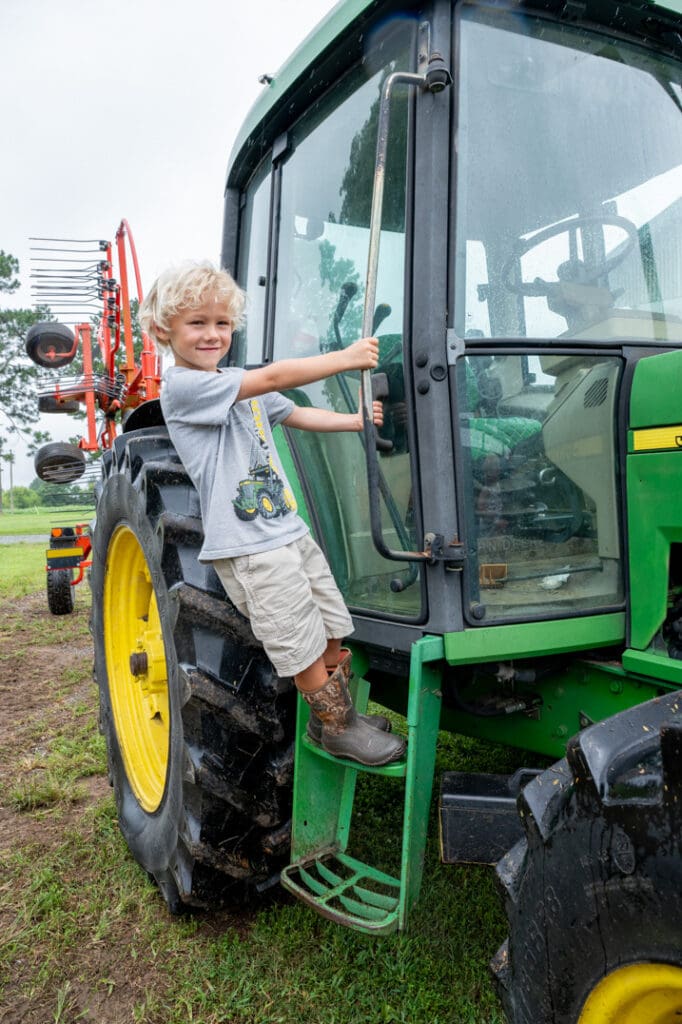
Neill is gradually handing more responsibility to the next generation and finds much joy in passing along his knowledge, especially to his grandsons, Julius Lindley III, 8, Mason Lindley, 5, and 1 ½-year-old Silas Lindley. The older boys eagerly run to help treat calcium-deficient cows and herd goats, absorbing the rhythms of farm life just like Neill once did.
“I think my goal, even as a child, was, ‘I’m going to run this farm one day and just be able to step out the back door and watch it all happen,’” Neill says. “And my dream came true.”