
At Word & Plant, dye plants, herbs and community grow through workshops that connect people, art and nature.
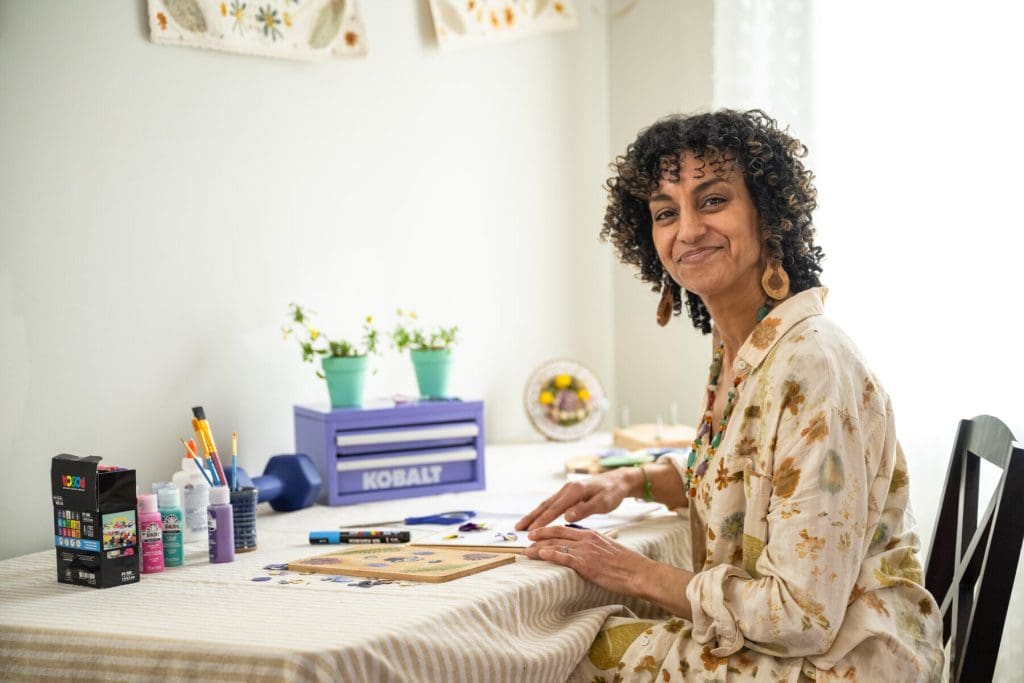
By Sharon Kinsella | Photography by John Michael Simpson
Just five minutes from the Pittsboro traffic circle sits a 3.5-acre plot where perennials, dye plants, medicinal herbs and edible flowers are putting down long-awaited roots. True to its name, The Garden Haven & Farm stands in an open field tucked against serene pockets of forest. It includes a 60 year-old pole barn that Deena Class is restoring as the welcoming face of the farm. After years of moving beloved greenery from place to place, having “a true home for my plants to really settle in and live their best lives is deeply meaningful to me,” she says. The farm is both sanctuary and studio – the physical heart of her business, Word & Plant.
Deena – a botanical artist, plant educator and farmer – founded Word & Plant in 2020 after decades of living and working across multiple disciplines and four continents. She noticed a through line in her career: a deep curiosity about what helps people feel “included, respected and meaningfully engaged.” That insight, paired with her creativity and lifelong love of plants, shaped the path forward. “In hindsight, Word & Plant had a certain inevitability to it,” she says. “I’ve always moved comfortably between life sciences, social sciences and creative practices … and I’m deeply interested in how it’s all connected.” Her work weaves those threads – research, creativity and cultivation – into one community-centered practice.
Deena invites beginners, seasoned makers, kids and adults alike to explore herbal skincare, natural dyeing, sustainable gardening, dried flower art and more through workshops held at the farm and throughout the Triangle. Her teaching style balances clear process guidance with room to experiment. “I never want to be seen as ‘the expert’ in the room,” she says. Instead, she frames classes as collaborative and exploratory – offering enough depth for participants to understand the medium, while leaving space to ask, “What would happen if … ?” At the farm, that curiosity is nurtured alongside the plants themselves, with specialty varieties propagated for sale so more local gardeners can bring these often hard-to-find species into their own landscapes.
“My dream is that our place will truly become a haven for community members,” Deena says, “A place where folks know they can come to learn, get creative, relax, get some fresh air and convene with nature.”
Press Your Own Flowers and Leaves
This kid-friendly flower- and leaf-pressing craft allows you to embellish an item of your choice – preserving blooms for a touch of spring color year-round.
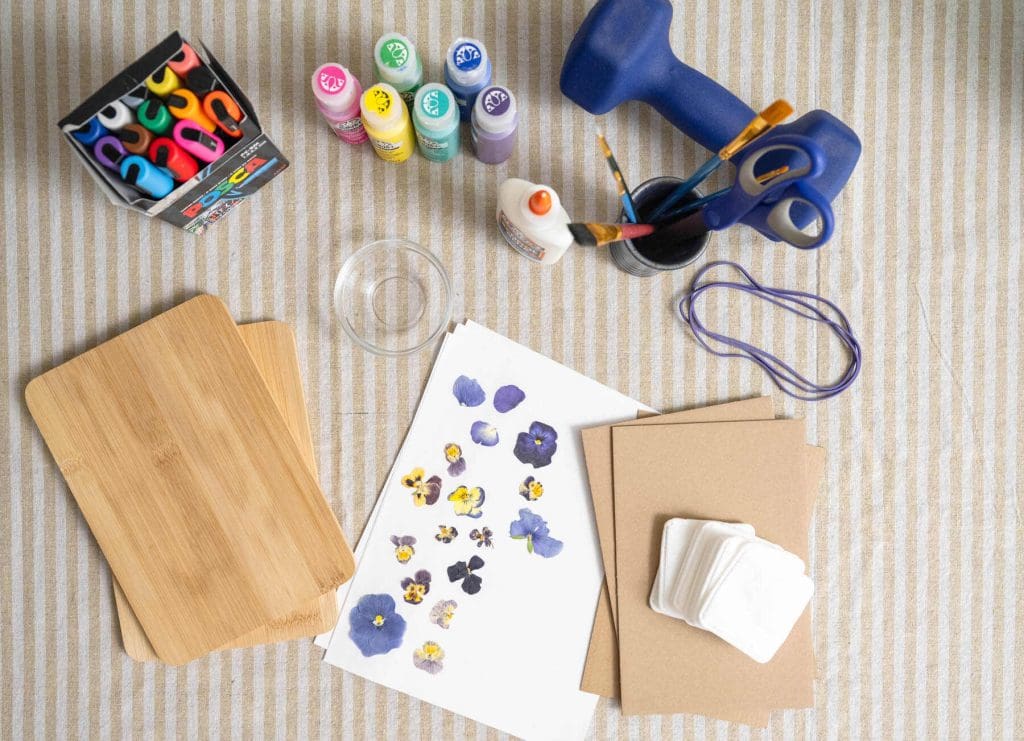
MATERIALS
» Two non-pressure-treated wooden boards (like bamboo cutting boards from the dollar store, leftover wooden boards from a DIY home improvement project or wooden plaques from the craft store)
» At least two brown cardboard sheets cut to the size of your wooden boards (box flaps work great)
» Regular copy paper, cut to the size of your wooden boards
» Smooth facial cotton pads, optional
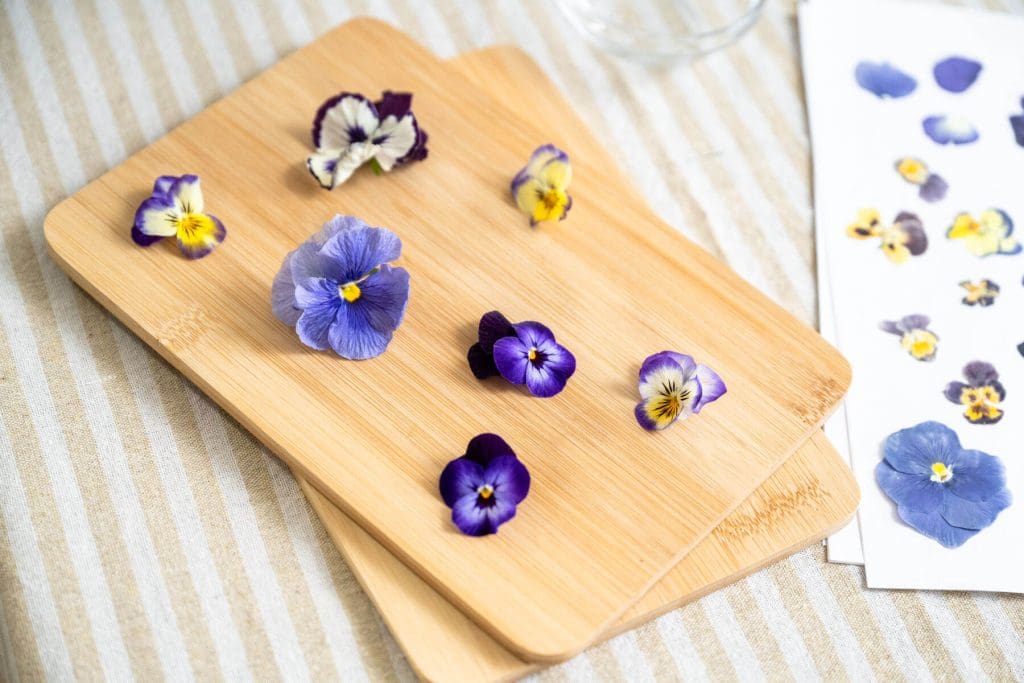
» Foraged flowers and leaves
» A heavy object that can sit on top of the boards, like a dumbbell or kettlebell
» Long rubber bands or file bands, optional
» Mod Podge or white school glue, like Elmer’s
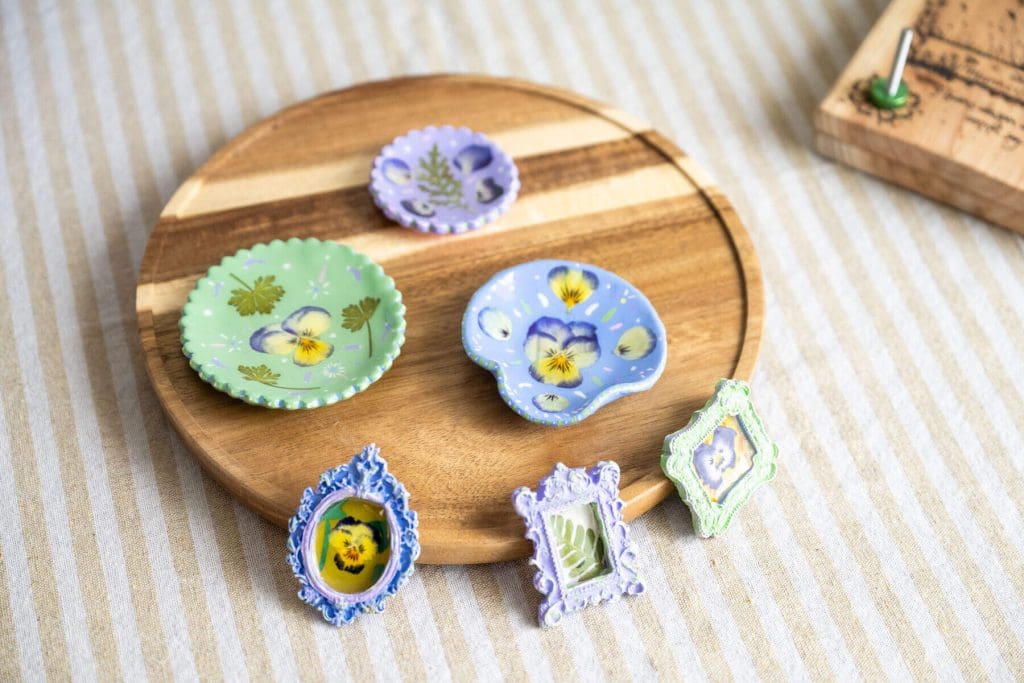
» Something you want to attach your flowers to – it could be the flower press plates themselves, a simple clay trinket dish you’ve bought or made, a glass jar, etc.
» A soft, flat paint brush
» Water
» Paints, paint markers or other art supplies to embellish your project, optional
INSTRUCTIONS
PART ONE: Making the press

- Lay your first wooden board down on a flat, hard surface, then layer on a sheet of cardboard, a sheet of paper and, if your flower has a prominent center or thick petals, a cotton pad.
- Flip your flower or leaf top side facing down and gently squish it flat. (You may need to “break” the petals away from the center of the flower a bit to get it to lay flat.) Fill your pressing area like this with as much flora as you’d like – just be careful that your foliage doesn’t touch.
- Once you have your layer of flowers and leaves, stack materials in reverse order: cotton pads, paper, cardboard, then wood.
- To press multiple layers, repeat the stack with cardboard between the layers of paper and plants, laying your second wooden board on top of the entire stack.
- Wrap the stack in long file bands to hold the layers together and minimize shifting. Press down firmly on the stack with your palms using your body weight, and place your dumbbell or other heavy object on top.
PART TWO: Using your pressed foliage
- Once your flowers and leaves are completely dry and flat – they should feel cool to the touch and not flop when you remove them from the press – you’re ready to craft with them.
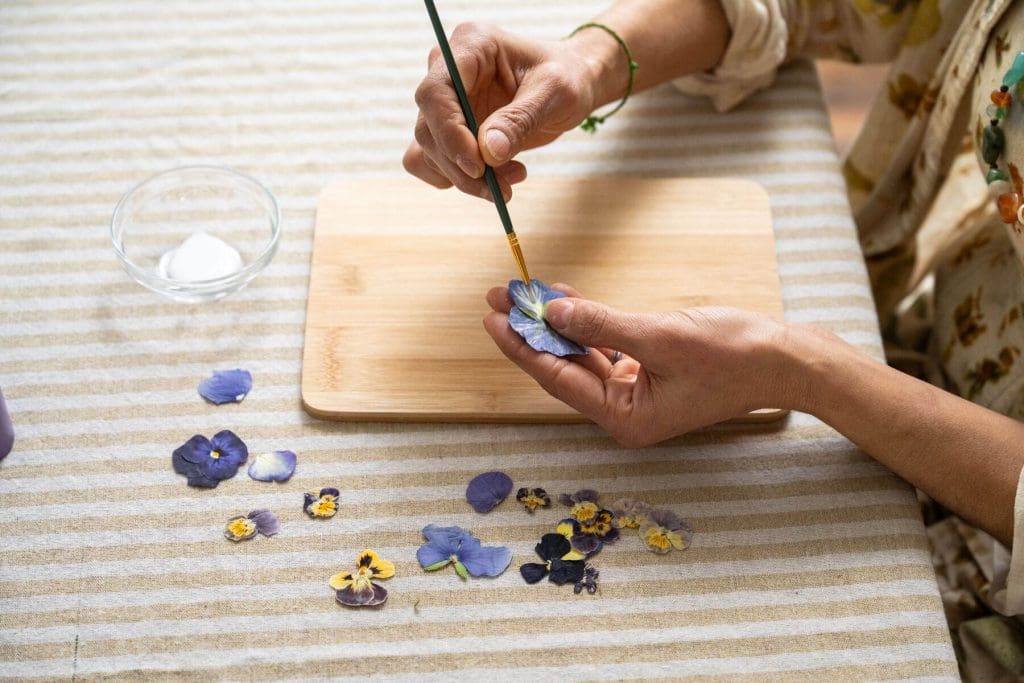
- Water down your school glue or Mod Podge a little – just enough so that you can spread it easily with your paint brush – and brush some glue onto your glass jar, ceramic trinket dish or wherever you want to place your first flower.
- Gently press your flower or leaf onto the glue and apply a thin layer of glue on top.
- After the glue has dried, consider adding more glue on top. You can keep adding layers after each one dries to make your creation as smooth as you would like.
- You can also embellish your design with paints, paint markers or other mediums that work on your base material – for example, glass paint on glass jars.
- Keep your creation out of direct sunlight to preserve the flowers and leaves’ natural colors, or use a UV-protective clear coat.
TIPS AND TRICKS:
» Gather flowers after the morning dew has evaporated, but before they’re baking in the sun, for best pressing. » Using smooth cotton facial pads – either on both sides of the flower or just the top – helps absorb moisture from flowers with thicker petals or prominent centers to prevent mold. » If you’re pressing dye flowers for a practice like eco-printing or bundle dyeing, don’t throw away moldy or “imperfect” flowers. They may seem ruined, but they will still work perfectly! » Store unused pressed flowers in a plastic or glass container, spread between sheets of paper with a bit of rice to absorb any excess moisture.

CREATIVE VARIATIONS:
Press edible flowers like dianthus species, eastern redbud, violas, pansies, bee balm and anise hyssop to use on cakes or flatbread, like focaccia. Deena recommends checking out “Eat Your Flowers: A Cookbook” by Loria Stern from Chatham County Public Libraries for inspiration.
Eco-printing is a dyeing technique that transfers pigments directly from plants, leaves and flowers onto fabric or paper using heat and pressure. This pressing technique helps prepare botanicals for eco-printing by flattening and preserving their shape and color. These species work especially well for
the process:
Flowers and leaves:
- coreopsis
- Bidens
- goldenrod
Just flowers:
- Cosmos
- Hibiscus
Just leaves:
- Carolina cranesbill geranium
- sulfur cosmos
- Almost all North Carolina native hardwood trees, including oak, maple, sweetgum, hickory and sumac
Stories in Blue
This spring, Deena is leading a free community indigo-dyeing project through the Chatham Arts Council, exploring our shared relationship with a plant pigment that has connected cultures around the world for millennia. She invites community members to share their cultural heritage and creative interests while exploring the roles plants play in their lives. As she listens and learns, she’ll research indigo-bearing plants connected to participants’ backgrounds and weave those discoveries into community textile workshops – dates, times and locations to be determined. The initiative culminates in a free community dye day April 12 at the farm, where participants will dye two fabric squares – one to keep and one to contribute to a collective quilt – and receive an indigo seedling to grow at home. Free, drop-in sewing sessions (no experience or equipment required) will follow April 26 and May 3 at the Chatham Parks & Rec Arts Center, where attendees will stitch the dyed blocks together, symbolizing indigo as a living thread that runs through us all. The finished work will then be showcased in venues around the county in May.
Sign up for Deena’s email newsletter at wordandplant.com to learn about upcoming events, workshops, markets and festivals. Subscribers also receive special offers and access to unique engagement opportunities – including work-trade options to help her prepare for events in exchange for a complimentary workshop or product.